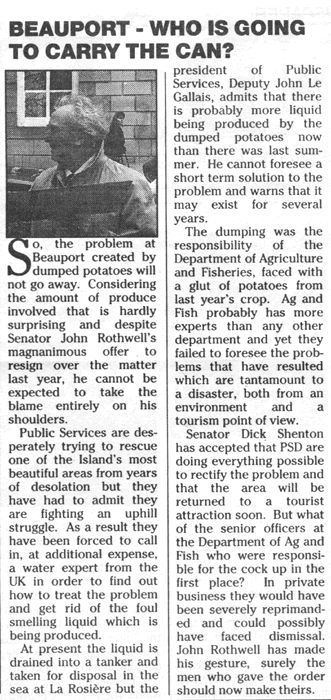
Beauport potato farce 1992 to 2092
The idea of dumping potatoes at Beauport Bay must have been the biggest environmental mistake that Jersey's Agricultural Committee had ever made. Or do you know better?
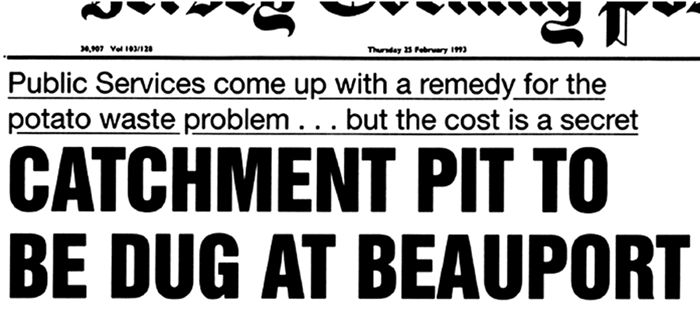
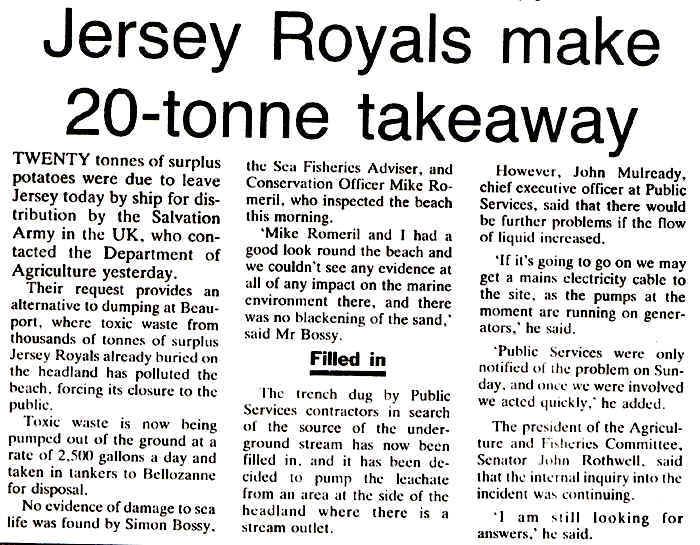
Who ever thought up the idea of dumping thousands of tons of freshly dug potatoes on a field above the beautiful Beauport Bay because of a glut should have been sacked. In 1992, potatoes growers in the island were not able to export all they grew. Whereas in the past they would have rotovated or ploughed in their surplus potatoes crop. That year the authorities decided that to avoid diseases such as blight spreading around the island and the soil on their land being polluted, they would get the potato growers to lift their surplus crop and dump it at Beauport Bay. Over many years growers had disposed of their own surplus crop in their own way, some would have dug them and made a heap in the corner of a field for them to rot and others would have ploughed them in. I understand that the growers were paid around £30.00 a vergee for their effort.
When I first heard about the potatoes that were going to be dumped above Beauport Bay, I was horrified to think of the consequences. The idea was to bury the potatoes in deep trenches and wait for them to rot. As it turned out some of the trenches were dug up to eighteen feet deep.
The Agricultural Department had employed a haulage contractor to undertake the excavation of the trenches and the growers were already arriving with huge tractors and trailers and lorries with their potatoes when I first saw what the new dump. The contractor started digging in the ground with large diggers. The top soil was a sort of gravely sand about eighteen inches deep and the subsoil, can't really call it soil, it was loose rock. The diggers scraped the top soil off and placed it to one side and the rock beneath was dug out and was heaped up on the side of the field.
It was quite scary to think what was going on, it was like a nightmare. I took a walk over the proposed area that was going to be used for dumping and I noticed that there were a couple of large damp patches with tall grasses and weeds growing in them. I guessed that they must have been active springs. I went across to a small copse of bushes nearby and broke off a small branch so that I could do water divining. I wanted to confirm my suspicion. I was right, there was a very strong pull on my divining branch, there was water just beneath the surface.
They would not listen to me.
I went along nearly every day to monitor the progress on the dump. I contacted as many inferential people as I could. I contacted the Tourism Office and the Public Health Department, I spoke to the Constable and the Deputies of our parish of St Brelade. I spoke to at least eighteen members of the Jersey Government. I had a positive response from only five of them, some others laughed at the idea of stopping the dumping, telling me that I was concerned unnecessarily. At my request, a few met me on site to see, as they put it, "what all the fuss was about."
I asked Agriculture's Laboratory Department what the water/juice content of a Jersey Royal potato was and they sent me a report giving me the information that it was 96%.
I thought that it was totally wrong of the local growers to dump onto a headland without thinking what the results would be. With good husbandry and local knowledge, I was disappointed that they would have allowed themselves to be persuaded to dump their potatoes at Beauport.
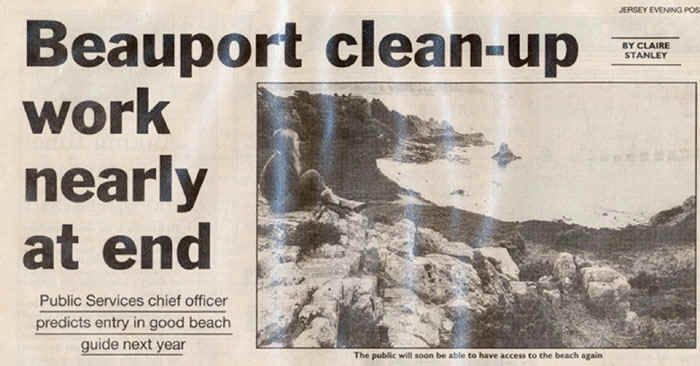
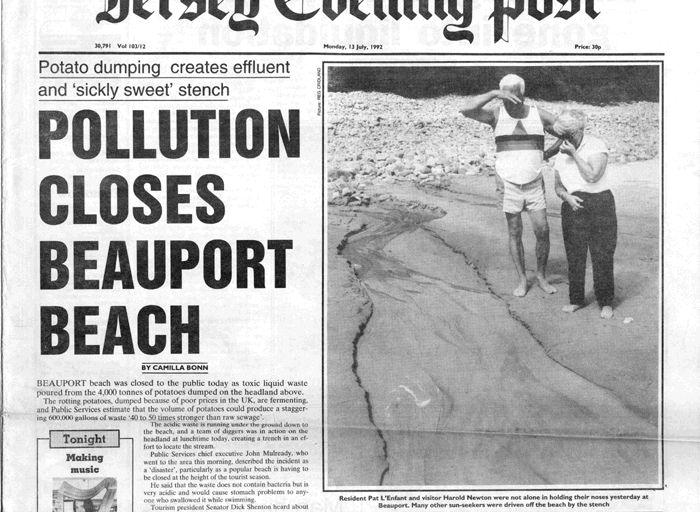
I contacted the media and had a 100% response, especially from the Jersey Evening Post with one of their senior reporters. That reporter and I kept the public at large fully informed as to what was going on up at Beauport for the next twenty months.
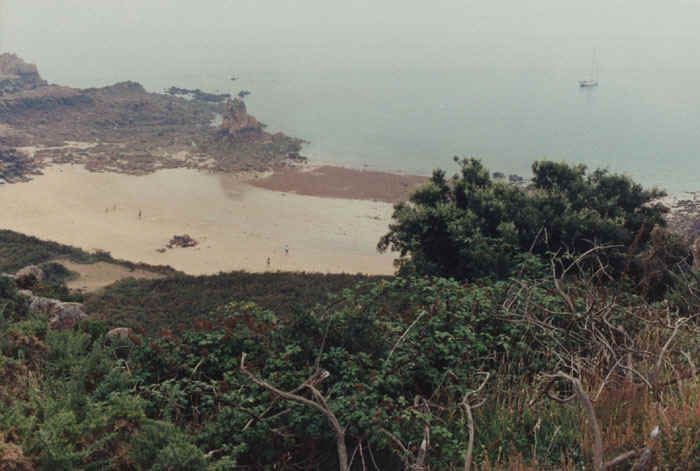
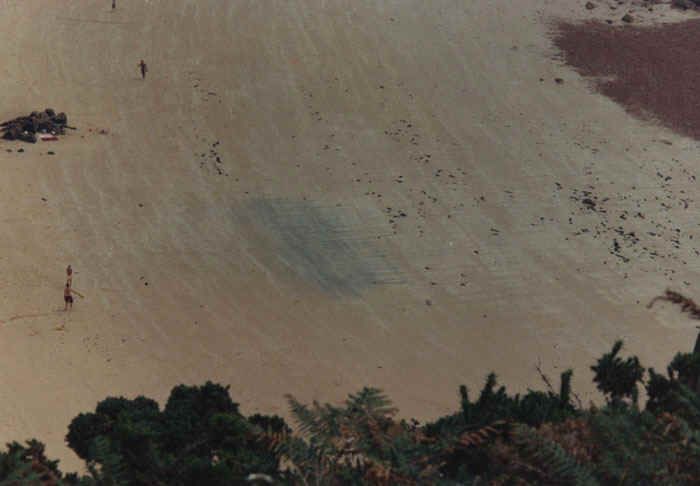
You can just see the rotten potato juice on the beach
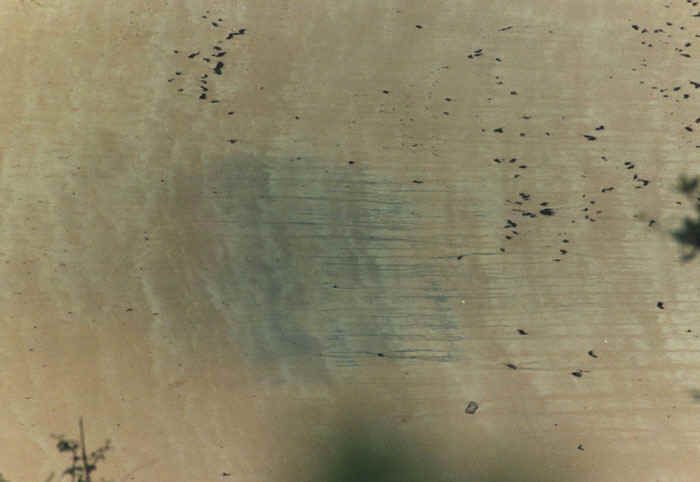
Below is a close up view of potato juice on the beach. I had been told by the Jersey's Agricultural department that the dark patch was rotting seaweed, nothing to do with with the potatoes. What do you think?
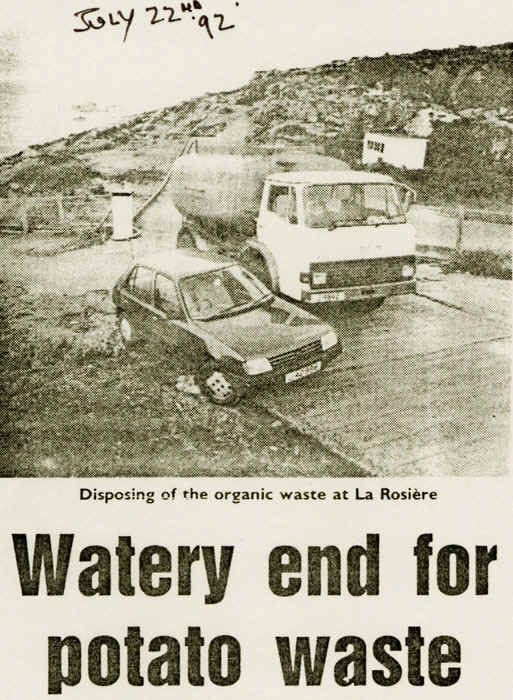
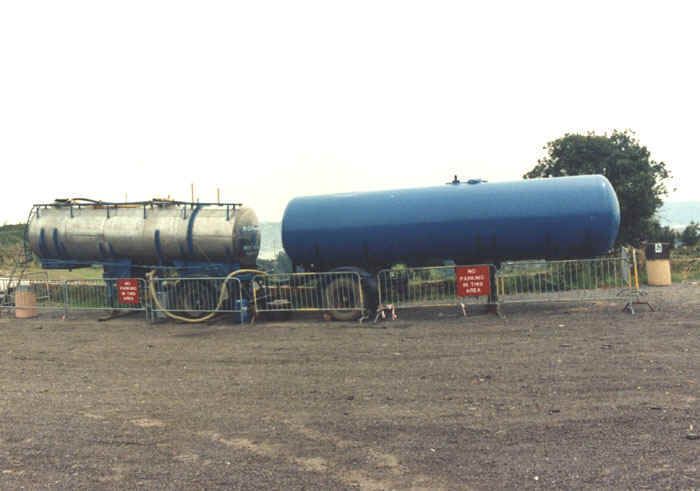
These tanker trailers were waiting to be filled up with crushed potato juice. They were sited for a year on the car park overlooking the bay, in my opinion the most beautiful bay in Jersey.
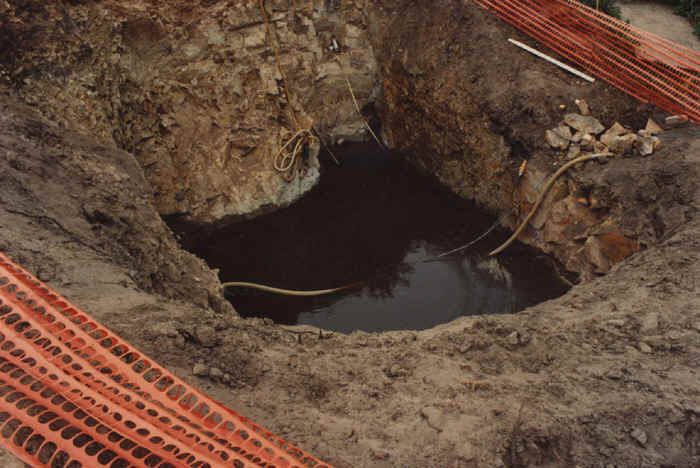
Crushed potato juice, the smell was horrendous. At that time I thought that that deep hole was not adequately protected and public passing nearby with children or animals could have easily fallen into it.
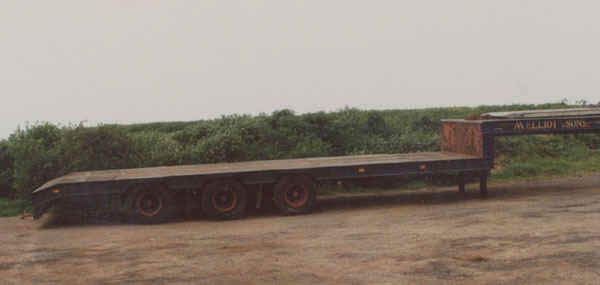
This trailer transported the forty feet long tank.
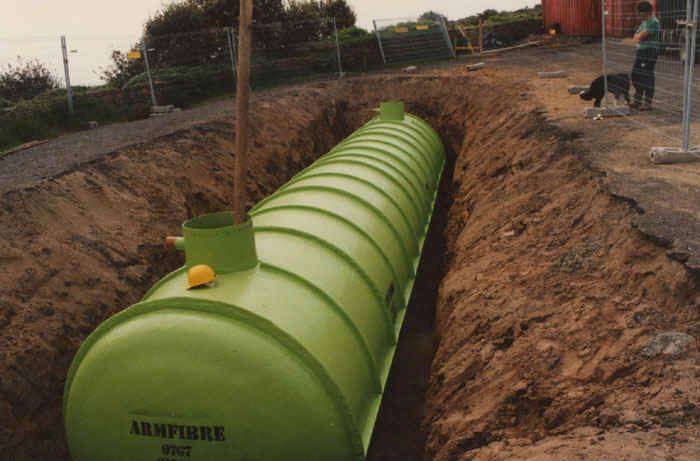
The tank below was installed in the hole under the car park, it was to replace the tanker trailers.
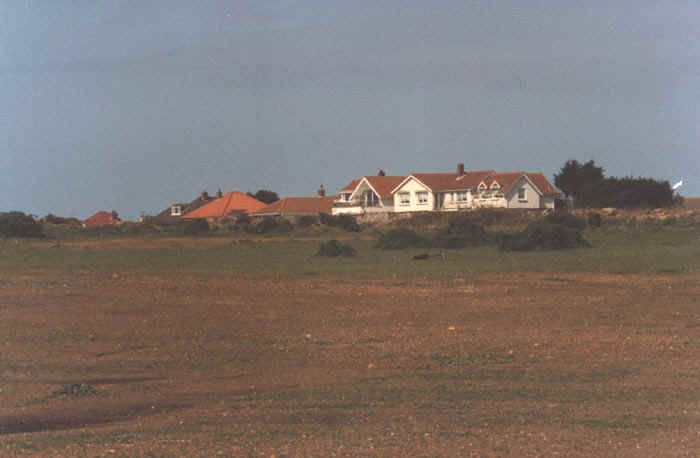
The potato dump was very near to luxury homes, a bit close for comfort. The damp patch on the bottom left of the picture is one of the water springs that I discovered soon after the first trenches were dug.
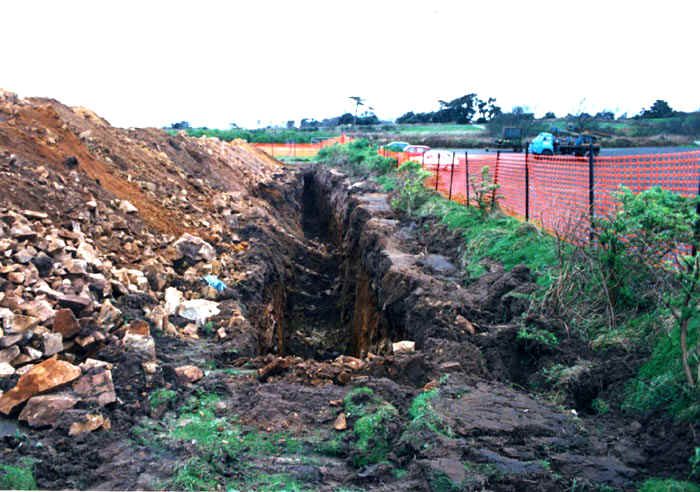

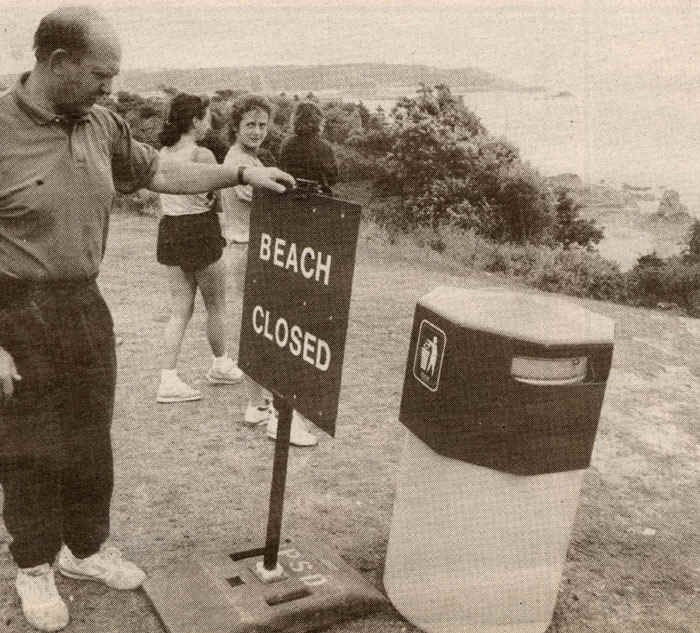
The were not laughing then, they saw it was nothing to sniff at.
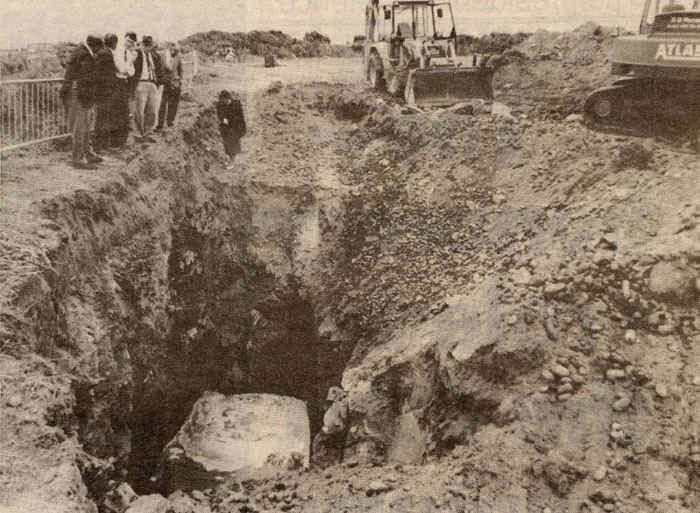
This trench is over eighteen feet deep
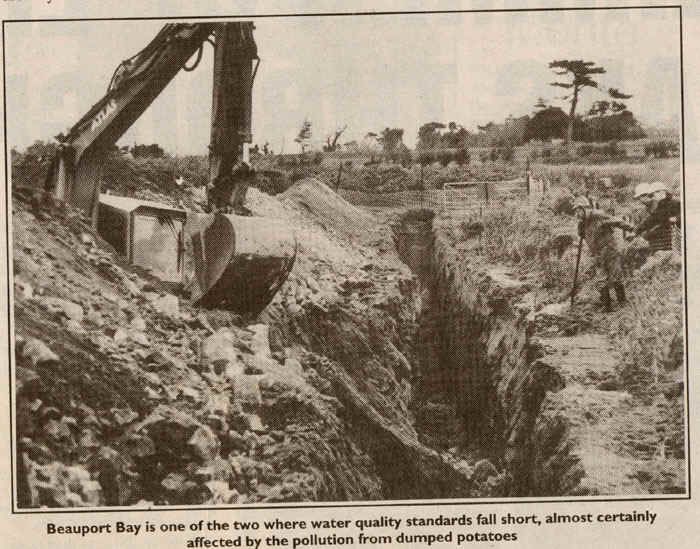
I had estimated that the contractor had carted over ten thousand tons of shale and rock away from the site. I did suggest at the time that the shale should be stockpiled nearby so as it would replace the potatoes when they had rotted in the trenches This item is © Jersey Evening Post
The tanker was dumping the potato juice from Beauport Bay within a few feet of the inlet to the desalination plant supplying the whole island with drinking water.