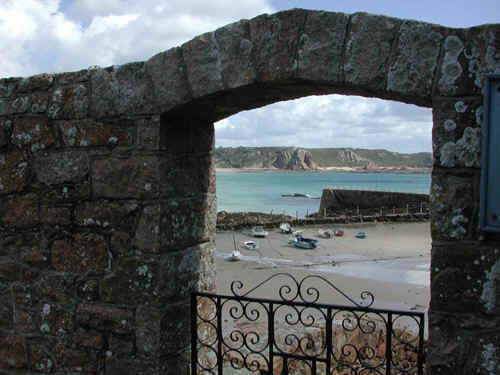
Reg Langlois on life after the Occupation: the family tomato business, Grandpa’s yachts, first television, the Jersey Grand Prix, leaving school and his first car.
Back to normal (if we ever could be)
My father and grandfather returned to their business of growing tomatoes as soon as they could after the occupation. The plants were waiting to be planted and the French workers were waiting to come to Jersey as they had before the war. Transport had to be arranged for carting the plants and bamboo canes to the fields so they went to a machinery sale at Springfield Sports Ground and returned to the farm with a few lorries and other bits and pieces.
This was part of their shopping list.
Lorries... 1x M.A.N. (German) diesel, long wheel base, flat platform. It was used occasionally for heavy loads but was difficult to get started.
It spent most of its time in the farm garage and finally ended up in a field rotting away.
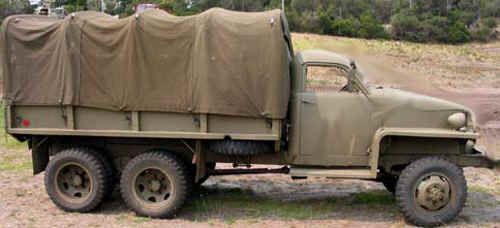
1x Studebaker (US) petrol, six-wheeler. Used every day and easy to drive. It was ideal for driving over the land with its twin rear axles but not the sort of truck you would use to go down to pick up the weekly shopping from the local shop. When cash got short my father sold it to a haulage contractor who used it for many years.
Studebaker truck similar to the one below
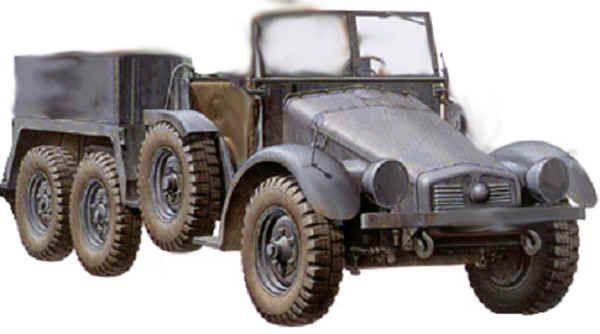
6x Krupps (German) petrol, troop carrier, wheeled version of the half-track. These were my favorites. They had fold-flat windscreens and removable hoods and were so adaptable, they were used for carrying produce such as tomatoes in from the fields without too much bouncing about due to their fantastic suspension and their six wheels. They were also used to collect vraic (seaweed) on the beach from the right hand corner of Havre des Pas near the Fort d'Auvergne hotel. After a good storm the vraic would have been driven into that corner up to three feet high, making it easier to load onto the lorries. The loads could not be any higher than four feet because of the restricted height of the Havre des Pas swimming pool bridge under which the lorries had to pass to return to the slipway.
Krupp troop carrier, similar to the one below
1x Lancia (Italian) diesel, long wheelbase, flat platform lorry with a hand primed hydraulic starter motor. It was used half a dozen times and the last I saw of it was when it was being towed out of the yard at Sion Hall after being parked there for many years.
1x Make unknown, charcoal powered, (converted from petrol) small flat platform truck that Grandma was not happy with as it made a mess when it was parked in the yard and people would walk through the tar or pitch that it dropped on the ground. I never did see it on the road.
1x Dodge (Canadian) petrol, long wheelbase, flat platform, converted to a fifteen feet flat platform truck. Like the Studebaker, it was easy to drive and my father took it with him when we moved to The Brae. I would drive it around the fields collecting boxes of tomatoes that had just been picked and taking them back to the farm. On several occasions I was allowed to drive it on the road down to Normans tomato packing store at Commercial Buildings in St Helier when I was only fifteen years old, accompanied by a person with a driving license of course.
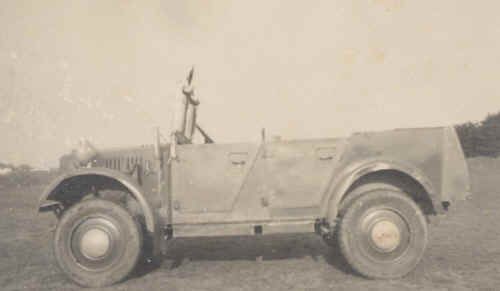
1x Stower (German) four-wheel steering, three-seater radio vehicle.
50x Bicycles (German) heavy duty with reverse pedal brakes.
The bikes were hardly ever used, maybe only ten at the most, the rest were left to rust in the shed.
Various types of trailers, carpentry tools, garage and machine tools, grease. Electric motors, miles of cables, winches with cables from barrage balloons. That would have to do for the first year. Fuel was no longer a problem, as it was arriving in huge quantities. The farm had its own underground petrol fuel tank.
Our wonderful Staff
A skeleton staff of Jerseymen was kept on throughout the occupation just to keep the farm ticking over. One was called Frank Davy and the other A. Le Lievre. In 1940 they earned £1.15s. 0d. for a forty-eight hour week. They were Jacks-of-all-trades for, with a farm the size of Sion Hall, it had been a full time job for them just doing the maintenance around the place. Now it would be different. Forty to fifty French workers were due to arrive within the next few weeks to look after the tomato crop and they would bring their families with them. The men and their wives would work in the fields while the grandmothers or the aunts would look after the children. Those who did not have the luxury of baby-sitting grandmothers in Jersey would have to leave their children with carers back in France. Some parents might not see their children for anything up to five months.
Their main aim in life was to work hard and earn a lot of money to take back to make their homes in France more comfortable. As an example in 1947 they could earn as much as £8.17.9 for a 95 hour week. French workers had been coming over to Jersey for years and they would normally return to the same farms each year. Although many had not worked in Jersey for five years, within a couple of weeks of their being back you would have thought that they had never been away.
When they first arrived on the farm they would go into the building that was going to be their home for the next six months. The first to arrive had first choice of the loft and they could choose for their family whether they would have the left side or the right side. When they had chosen, they would build a wall of straw bales to screen themselves off from the next family and so on throughout the loft until it was full. There might have been as many as six families up there. The men in the family would normally be making the family nest while their wives would be preparing their first meal. The older children were sent out to the fields to pick up any wood that they could find so that their mothers could build up the large communal fireplace to cook their meals. They must have guessed that Jersey had been short of food, and they were right, because when they arrived they had enough food to last them months. They brought cheese, ham, bread, beans, dried fish and sausage as well as wine, cider and calvados. They invited us to share some of their food with them for they knew that we had not been as fortunate as they. We thanked them for their kind offer but told them that we now had enough food. They were also occupied and liberated but they were liberated a year earlier than we were, although they were only living sixty miles away. The British powers-that-be decided that it was in everybody's interest to let us sweat it out for another year. In that last year many Jersey people were starving and, had the Red Cross not helped us with their parcels, many of our islanders would have died. I have never understood the reason behind the British government's decision to keep us imprisoned for that extra year. Within a couple of weeks the farm was back to normal. Grandpa Langlois had managed the operation very well, as was expected of him. The family rallied around and so did the neighbouring growers. That first year after the occupation was going to be difficult for everyone. Nobody knew what the future would bring except that it would be a testing time for all. Grandpa had always said that a luxury crop like tomatoes, and they were a luxury in those days, would be wanted after the war as the people in Britain would be fed up with only bread and potatoes. As usual, Grandpa was right. He had put all his eggs in one basket and grew thousands of tomato plants. There were tomatoes everywhere.
Grandpa's Yachts
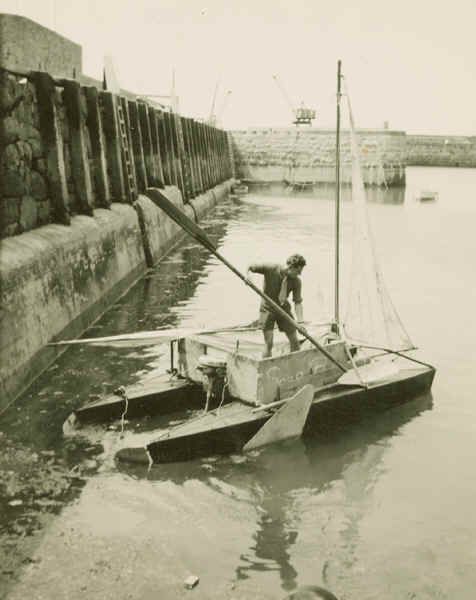
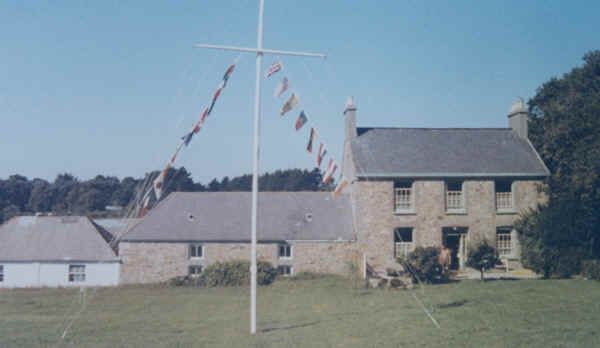
Grandpa's passions were the family and his yachts. He often had a fleet of yachts of anything up to four. He loved to have yachts as some people have dogs. His favourite yacht was the Callou, built in 1935 of wooden construction, 41 feet long and weighing about 12 tons. The rig was sail/ketch with a diesel oil engine. It upset him greatly when the Germans requisitioned the Callou on their arrival in Jersey at the beginning of the occupation. They used it throughout the war as a patrol boat in local waters and made many modifications. They bolted a large machine gun on the deck up on the bow and cut bulkheads away in places for easy access. Grandpa was even more upset when he discovered that the diesel engine had been wrecked. As soon as Callou had been returned to him, he insisted that his yacht should be checked over for booby traps. He, my father and I went down to the harbour with a load of tools to do some work on it.. Grandpa's and my father's first job was to unbolt the heavy gun, waltzing it towards the side where Grandpa appeared just in time to give it a good push over the edge and onto the harbour floor. It was dragged up onto the slipway near the South Pier Shipyard. In a short time Grandpa had a new engine supplied and installed. Talking about yachts, this fellow turned up in St. Helier harbour from France. He had sailed his 'pride and joy' over to Jersey - a distance of thirty miles. I never knew how or why, but he parked his boat and himself up at Sion Hall for several months.
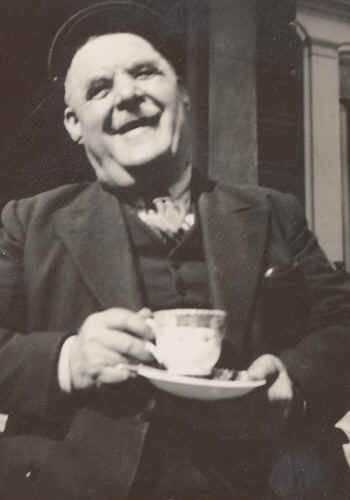
One of Grandpa's crew / friend
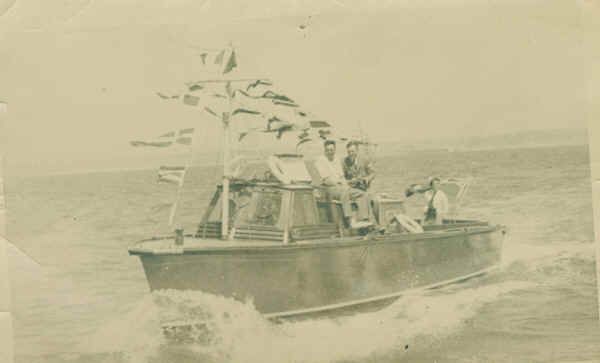
Callou 41 ft built 1935 wood sail/ketch oil engine Desiree 30 ft wood, built for my grandfather in the 1930's Large lifeboat 30 ft conversion
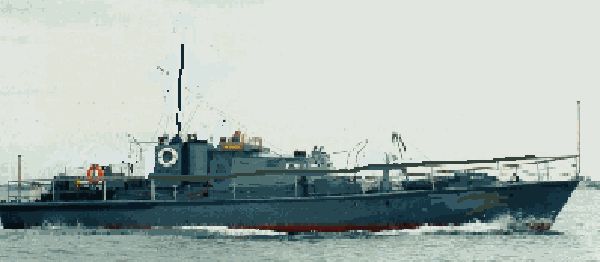
Dessie 72 ft HDML .... Similar to picture above
From St Malo
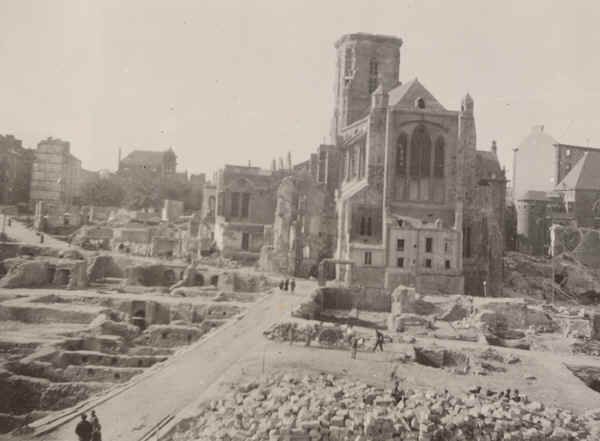
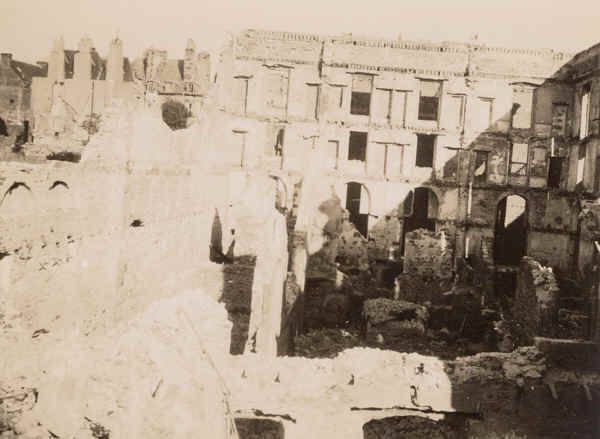
St Malo after the war
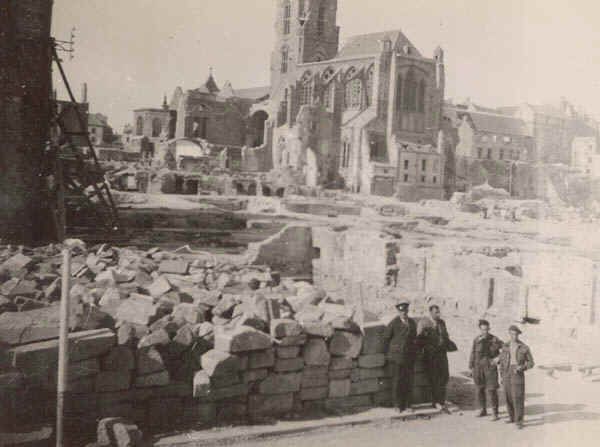
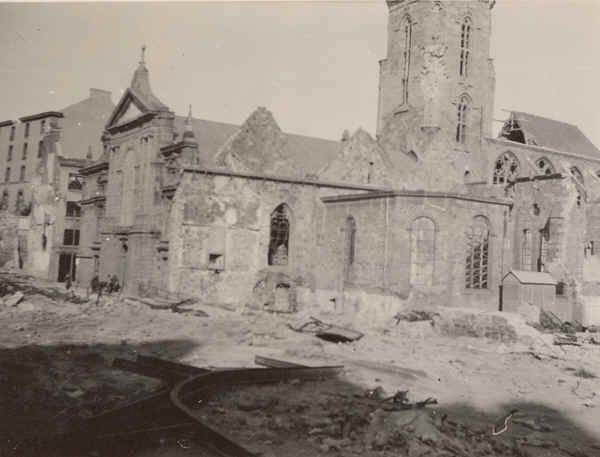
Before the occupation, two of Grandpa's Yachts, the Callou and Desiree, were used for transporting British troops from St Malo to Jersey when they were cornered in that part of France by the advancing German army in 1940. The two yachts were part of a flotilla of other privately owned yachts whose owners volunteered their help along with other yachtsmen.
In 1951, Grandfather's largest Yacht, Dessie, a converted HDML British naval vessel seventy-two feet long, was used on one occasion for a Royal duty. My Grandmother was asked if Dessie could be made available for carrying The Duchess of Kent to Guernsey. The Duchess of Kent had been visiting Jersey and was going on to the other island when mist and fog suddenly came down, preventing the cross channel passenger boat from leaving the island. Guernsey was clear of fog and it was decided to take the Duchess on a smaller vessel with an experienced crew. The crew, including some of the Langlois clan, had assembled on board a couple of hours before departure when a car from Government House arrived with a canteen of cutlery for the Duchess to use on board. Grandma put her foot down and said that "if my cutlery is not good enough for the Duchess of Kent then neither is the boat". I heard later that the driver put the canteen of cutlery back in the boot of the Governor's car and headed for home. The Duchess of Kent heard that my grandfather, the owner of Dessie, was in hospital recovering from a serious accident. She asked that the flowers given to her on her visit to Jersey be passed on to him. That was very thoughtful of her I think. Grandpa's accident in St Malo was caused by a mooring rope that was made fast on the dockside and around the bow bollard on the boat. He was up on the bow when the boat suddenly lurched, Grandpa stepped backwards and his foot was caught in the rope, twisting it badly. It was decided by Grandpa, who was always in charge, that Dessie would return to Jersey as soon as possible. The journey did not take very long in the dark until they reached the Dogs Nest, from where it took ages to find the way into the harbour because of the search lights on land which illuminated Elizabeth Castle for the Summer. They were badly positioned facing the approaches to the harbour, thus making it difficult to see the way in. Grandpa did not recover from his accident having spent several weeks in hospital undergoing one operation after another to combat gangrene.
Tomato Grower Extraordinaire
Grandpa Langlois, known to many as Pop Langlois, was a hard task master. He played hard and he worked even harder. He knew how to make a good living, owned a lot of property, farms, houses and land and was respected by all those with whom he had dealings. The high quality of his tomato exports also earned him the respect of the produce merchants throughout Great Britain. He was also respected by his workers to whom he was always fair and with whom he spoke in their language, Breton. He always rolled up his sleeves and worked along with them. On the quiet he would say to friends "you always get the best from them when you show them what you can do" He would start work with the first ones in the morning and still be there with the last ones at night. The Boss, Grandpa Langlois.
Grandpa was the last one to see his tomatoes, as he was the one covering the twenty-four pound boxes with paper before they were sent down to the habour. I was so proud when he let me hand him the packing paper.. He never sent anything but the best though I remember one occasion when a load of tomatoes was returned from the harbour by an inspector and Grandpa took one look at them, found them to be of good quality and had them loaded onto another lorry and sent back to the harbour. Later, he heard that the inspector who had refused that load had turned back many that day but, when he asked to speak to him, he was told that he had taken early retirement. In the height of the season my father and grandfather would have as many as five or six lorries waiting in a queue at the harbour. One man would unload the boxes from the lorry to the waiting dockers who stacked them on a platform to be hoisted by a crane onto a cargo boat. He would then move it to one side and go down the queue to move all the other Langlois lorries up until it was his turn to unload his next one. In the meantime, a lorry would arrive from the farm and join the end of the queue when the driver would collect the empty one, returning to the farm for his next load. I cannot see them doing that nowadays. During the tomato harvest, my grandfather spent most of his time in the packing sheds while my father was out in the fields with the tomato pickers. It was quite a sight, to see thirty people in line with their backs bent along rows of tomato plants, stopping every four yards or so with full baskets and taking them to the lorry at the end of the rows. There would be someone on the lorry to take the basket and tip it carefully into a box that could hold thirty pounds. I was allowed to help. In 1946 they grew as many as one and a half million tomato plants on bamboo canes. In most of the fields they were able to grow up to five trusses before they were stopped from growing any more.. From the time they were planted until they were cut down at the end of the season, the French workers looked after them doing piecework. One family could look after forty thousand plants during the season. The first season after the occupation must have been the best one for producing the biggest crop as the land had had a rest for four years. My father's brothers, Eddie and Jim, were also very big tomato growers and his brother Doug had a smallholding.
New Cars
At the end of the 1946 tomato season the whole family went on a spending spree one day and bought a few vehicles from St Helier Garages. My father had an Armstrong Siddley, Uncle Jim had a Humber Hawk, Uncle Ed had a Humber Super Snipe and Grandma Langlois had a Sunbeam Talbot Sports saloon. I cannot remember what cars Grandpa or Uncle Doug chose that day but I am sure they each bought one. They also bought new lorries, tractors, trailers and farm machinery as if they were going out of fashion. I can only remember the ones in this list but there were others.
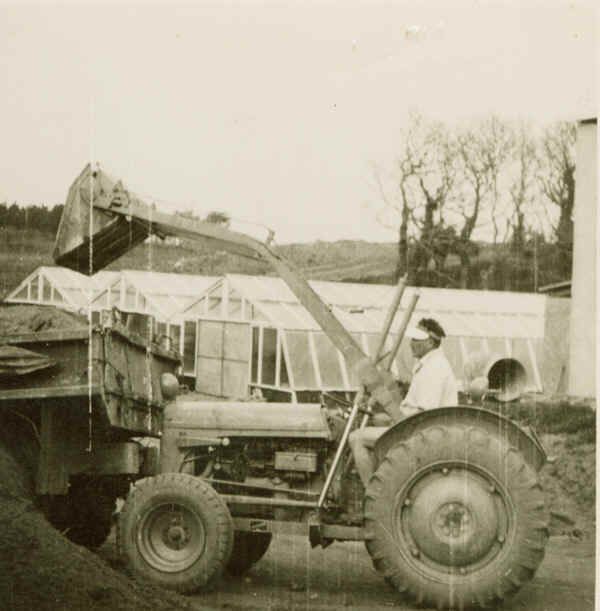
Ferguson tractor with every conceivable extra was the first on their list. David Brown tractor with most attachments.
Eight feet wide rotovator on rubber tyres Commer lorry with long wheel base.
On the move again
1947 Early February, I was just eleven years old and still at Victoria college when we moved to St Brelade on the other side of the island. My father and the bank had bought a house called The Brae and a farmhouse called Tabor Farm. There was a lot of land surrounding the two buildings, much of which had not been touched for years, and my father planned to grow very early crops, mainly tomatoes. The land was covered in bracken, wild lupins and gorse and there were hundreds of rabbits and rabbit warrens everywhere. It would have made a good wild life area. In addition, the Germans had been pretty busy in that area during the war and had left heaps of barbed wire and hundreds of galvanized steel posts that had to be pulled out of the ground but this did not deter my father from getting down to working the land. All the scrub land, the wild lupins and the bracken were rotovated in,.the gorse cut down and burnt and roots pulled out. When that was done, the whole area was rotovated again and then ploughed,. Our new neighbours said that the land had never looked so well. As my father did not have enough space under cover for storage, grading and packing tomatoes, he drew up a plan for a huge store with a purpose built packing shed of over seven thousand square feet, which was very large in those days.
Studebaker truck similar to the one below
My father had brought the Studebaker truck from Sion Hall to use at The Brae and it proved very useful in building the new store. It was taken to the quarry, loaded with concrete blocks and, when it returned, was driven into the right position next to the walls so that the block layers could use it instead of scaffolding. The store went up in a very short time, thus encouraging my father to do more building. He also needed a greenhouse for growing tomato plants. A heap of steel girders and boxes of glass arrived and, with a gang of our farm workers, a glasshouse one hundred feet long and sixty feet wide was erected in three weeks. My father had installed under- soil electric heating cables, a system still in its experimental stages, and I remember farmers telling him that he was taking a chance using that system. My father's new glasshouse
The only other underground electric soil heating system of any size was in South Africa and, unfortunately, a glasshouse heated by electricity was uneconomical to use. It had been a very expensive installation. Without heating for the glasshouse, my father had to buy in all the tomato plants, starting with a hundred thousand plants plus thousands of seedlings that we pricked out and grew on. That first year was a headache for him for the soil, although rested for so many years, was lifeless and very dry. The land was not as fertile as at Sion Hall, where the soil was deep and moist, and our first tomato season at The Brae was almost a complete failure. All that hard work was for nothing.
Life went on
During the Spring of 1947, my father bought a couple of secondhand, fast motor boats, thirty-six feet long and with a top speed of twenty-four knots. They were built by a company called The British Power Boats Company owned by Hubert Scott-Paine, a very famous figure in power-boat circles before WW2. They were worked on by a famous gentleman by the name of Thomas Edward Lawrence, otherwise known as Lawrence of Arabia. His daring exploits in the Great War (WW1) made him a living legend. The boats were berthed in St Aubin's Harbour and one of them, the Elizabeth, which was used most, was moored against the wall on the deep mud near the harbour mouth. The idea of keeping it on the mud was that it had little in the way of a keel and the propellers and propeller shafts were protruding through the bottom of the craft, so the mud would have cushioned them from being damaged on the hard harbour bed. The other craft, the Annette, was berthed on a heavy duty wooden cradle up against the Bulwarks. The Elizabeth had been used during the war as an Air Sea search rescue launch and the Annette had been used as a fast harbour fire fighting craft. They both had twin one hundred hp Meadows petrol engines. The Annette had, as her main fire fighting equipment, a Coventry Climax twenty-four hp side valve petrol engine and pump. This was taken off the craft immediately my father took delivery and it went straight up to the farm where, within a couple of days, it was pumping water onto the crops. My father later said that it was the water the pump that he was after and he had the craft for nothing.
Miss Kris
Before the war my father used to race around St Aubin's Bay and other bays with a little, flat- bottomed, clinker built racing machine with a thirty-two hp outboard motor. In those days, this boat was pretty fast and several of his contemporaries had similar ones that they used for competitive racing. In the 1950's, I remember one of my father's friends, Artie Le Sueur, took his speed boat out of St Aubin's harbour on a trial run. As he headed towards St Aubin's fort as fast as he could go, there was a flash of light, his outboard motor had caught fire and the craft sank in seconds as one would have expected when the craft had lost its transom. Artie survived his disaster. My father's racing machine, Miss Kris, appeared just after the occupation as if by magic. He must have hidden it very well on the farm, for this piece of highly polished furniture was his pride and joy and he would have been very unhappy had the Germans taken it away from him. At the end of the occupation, he took the family down to the beach at Greve D'Azette with the boat on a four wheel trailer. It was a fine day and very warm as we proudly pushed boat on its trailer into the sea. I had to stop when the water came up to my chest, and my father told me to wait for him on the beach while he launched the boat, when he would come back to fetch us. My mother called out to him that the trailer was floating and that he would not be able to launch the boat in the water. My father then had to pull the boat and trailer back out of the water and unload it on to the beach. He handled it as if it was made of glass and he took so long to unload it that the tide had receded a further twenty feet from us. He then had to pull his beautiful, highly-polished boat over the rough, sandy beach to catch up with the tide. I can appreciate now how he must have felt at having to scratch his bottom on the beach just to please the family. This was to be our first trip in a boat and was well worth waiting for.
The Brae ... it's History
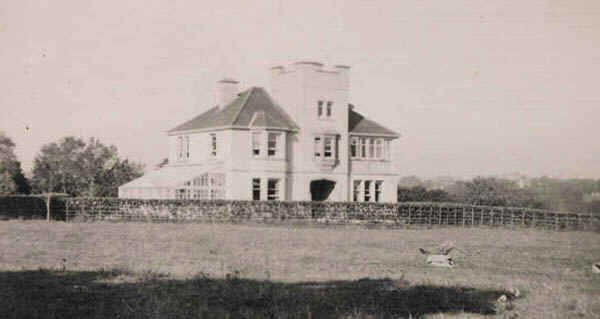
The Brae was an award winner and its design won the House of the Year in 1925 in The Mail newspaper. Much of the work that went into the plans was done by the owner T. C. Pullinger CBE. J. P. He was a car and an aircraft engine designer and was also Managing Director and part owner of Arrol - Johnson Ltd., well known car and aircraft engine manufacturers. T.C.P. retired to Jersey in 1926 and I understand that it was he that built car showrooms and workshops at Red Houses, St Brelade. The present Horse and Hound public house is where the showrooms would have been and the very large building at the rear was his workshops.
The Brae was finished in large, split flint stones. It was a three-storey building facing South, with a large conservatory running along the West side. Water was supplied by a self-powered ram pump that had been installed in the bottom of the valley and lifted water over eighty feet high to the top of the house. The design of the house was well ahead of its time and the coal fired central heating system would have done justice to a house four times the size. There were radiators everywhere, including the garage and there was glass-wool insulation between all the floor joists. The gardens covered over five acres and the valley at the rear of the house had a large, formal pond with a stream trickling water over small water falls leading into a lake with an island in its centre. On either side of the lake, pond and stream enormous hydrangeas and rhododendrons grew on the steep slopes.
The Brae was demolished in the early 1960's and The Silver Springs Hotel was built in its place.
Getting on with Growing
Tabor farm
The land around Tabor farm and the gardens of The Brae had to be the best drained in the island, in fact in was too well drained, much to our cost. My father's aim had been to grow very early tomatoes on the land that he had purchased in 1947. Fortunately he had continued to work with his father at Sion Hall and, at the same time, he was organizing everything at Tabor Farm. Working on the two farms sharing tractors and lorries took a fair bit of juggling. The farms are seven miles apart and when you are sharing labour, perhaps ten men, the time spent on the road is costly. 1946 to 1949 proved very profitable years for Sion Hall for nothing went wrong. The French work people came over to Jersey regularly but were living in stark conditions.
Fifty to one toilet
The workers' toilet was situated over the manure heap in a wooden enclosure that had a door with no lock. Its seat was a piece of wood 2" wide and 3" deep which ran the width of the cubicle. I remember the time when the manure heap caught alight and the person inside the toilet shot out screaming with laughter. Someone had lit a newspaper and held it under his friend's bottom while he sat there and, in so doing, had set the manure alight.
My father had a foreman at Tabor Farm, Bill Hinnard, who looked after the day to day running of the farm while my father was working at Sion Hall. It was very tiring running one farm and helping to run another and he soon decided to give his full attention to Tabor Farm.
One day in 1947 there was a tap on the door and half a dozen senior Scouts asked if they could camp on one of our fields. My mother said that she was not sure as we did not have an outside toilet but they had no problem with that as they had their own. They asked how much it would be to stay and my mother said we could not charge Scouts but they insisted they had to pay and they were the first of thousands that we had staying on our land as campers.
Shooting again
Before the occupation, my father, his father and his brothers belonged to.22 miniature rifle clubs around the island, where they only fired at targets. Most were crack shots and they won many awards. During the occupation they would have had to hand their guns into the Germans and after the occupation they started up again. My father and many of his friends, club members, obtained a large wooden shed that the the Germans had built somewhere in the island. They dismantled it and carted it on my fathers lorry to a site up at Pier Road, where it was reassembled for use as their clubhouse and rifle range. It was an exciting time for me to be included in the evening the club was officially opened by Sir Edward Grassett, the governor of Jersey. He named the club, St Helier Miniature Rifle Club. He made a speech and went on to fire the first shot. Maybe it was because I was the youngest there that he handed me the spent cartridge after he had blown into it, making a whistling sound. He told me to keep it as a memento of the special occasion.
All that must have made a lasting impression on me as I had my first shot that evening and continued to shoot regularly for the next twenty-five years, first at St Helier and later at St Brelade's rifle clubs.
First T V viewing
The first time that I saw a television set was when my father and I had been invited by Ernie Le Sueur, who had an electrical business in St Helier, to a hotel on the North coast of Jersey. The north coast is the highest part of the island and would have been the best place to receive the strongest signal.
He had set up aerials outside and indoors and he had also assembled television sets with all types of gadgets attached to them. I do not remember the name of the hotel but I do remember that it took a long time to reach there from home as it was on the opposite side of the island. Ernie collected us and drove us to the hotel to see his new toys, as my mother called them.
I think it was over a period of six weeks that we went along to that hotel to look at television. I can only describe what we saw as a fuzzy dark grey and black screen. Some evenings Ernie and my father got very excited with when they thought they could see images of people moving about. On a fine evening with perfect weather conditions they could certainly see something, but the people turned out to be the highlights on the cheeks of the BBC presenter.
It was over a year before my father was able to take delivery of a television set from Ernie, as we were living on the south of the island and could not get a strong enough signal. When the set arrived, we spent hours every day watching the test card, waiting for something to happen.
My Bike
For a couple of years, I had been going to school on a bike that I had put together with bits and pieces that I had salvaged though sometimes I would have taken the JMT number 12 double-decker bus from the terminus at St Helier to the bus stop at Tabor Chapel. The bike served me well then, quite by surprise and for no apparent, reason I was given a brand new Raleigh touring bike with three-speed gears and a dynamo. It was beautiful but very heavy. I did not know then that it would be my biggest present for several years. Cycling on the flat was easy but the hills were hard work and St Aubin's Hill was the worst part of my daily journey. It was so long that I had no strength left when I got to the top. Every afternoon as I struggled up the hill the driver of the number 12 bus would give me a toot and the conductor a wave as they passed me. One day the bus had stopped at the St Aubin's school stop, when I caught up with it and I was chatting to Bob, the conductor, when it moved on up the hill. I carried on talking to Bob as I held the vertical handrail and the bus was pulled me effortlessly up the hill. Bob was a little angry with me at first but soon came round to the idea of my hitching a life as I was careful.
That's Entertainment
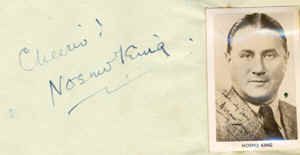
From the late 1940's, dozens of shows were held in Jersey. I think that Springfield had the most popular entertainers such as Nosmo King, well known for his songs such "My old Dutch". He took his name from the side of a railway box wagon. He had noticed that, when the door on the wagon was closed, it read NO SMOKING and, when it was open, it read NOSMO KING.
Jack Hubert Watson, actor, Nosmo's son,
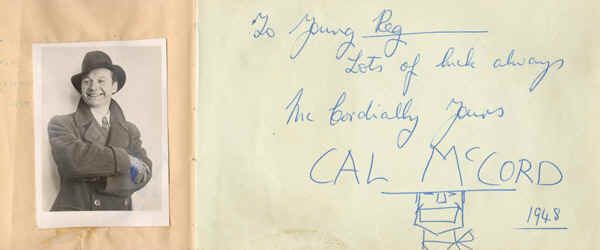
Larry and Babs Gordon, dancers Jack Train and Harry Duke, comedians, Cal McCord, lasso twirling cowboy and singer, used a forty-foot long rope with which he could encircle his horse while he was sitting on it without touching it. I thought that was very impressive. Eleanor Lee, Cal's wife had a beautiful singing voice.
Our family struck up a long-lasting friendship, particularly with Cal and Eleanor for over forty years, exchanging Christmas cards and visiting each other. The friendship started I think when they used to come up to our home for parties with other members of the cast of the show.
Just thinking about it now makes me think how lucky we were to have met these fine people. They always asked us if we would like a show and they always knew the answer would be "yes please" First Cal would go out in to the paddock and do his lassoing act by jumping in and out of the spinning rope and do a few tricks including lassoing up to ten people. He would then ask us to try to do the same but nobody ever volunteered. We would all go indoors, the children sitting on the stairs, to listen to someone telling jokes and someone else singing, but the evening always ended with Cal singing songs like "Maisy Dotes and Dozy Dotes" and "Old Mac Donald had a Farm", and everyone's favourite "Mamma's Little Baby Love Shortening Bread". They were wonderful days.
Jersey Grand Prix
Masaratti, Bugatti, Ferrari, Jaguar, Talbot and my favourite ERA and other cars came over to Jersey with World class drivers. I can remember some of them such as Bob Gerard, Prince Bira, local drivers John Bennett, Mike Lord Louth. Two Grand Prix races were held, one in 1948 and the other in1949. They started at the Grand Hotel end of Victoria avenue heading west to and around the hairpin bend at Bel Royal Garage and returning along the inner road to West Park.. I cannot remember how many laps there were but I can remember the horrible smell of hot oil, burning tyres and worst still the strong smell of exhaust fumes. The noise from the exhausts was unbelievable despite the cotton wool my grandmother had plugged in my ears Two years following, my grandfather Hodgetts had painted Prince Bira's lucky mascot, a little white mouse, on the side of his car and the Prince had given him a few tickets for the family for the area on the side of the road opposite the pits. With a smile, my father said we could not refuse them and that we had to go. My father followed loved motor sport and always took me to took me to the sand races at St Ouens, the hill climb at Bouley Bay and the scrambles around the island. His friend, Phil Touzel, whom he had known for many years, was always at these events for it was he who used to set out the course with rope. My father had other friends who were always part of the motor scene such as Buck Margire and Gordon Bisson.
Fun over, back to work
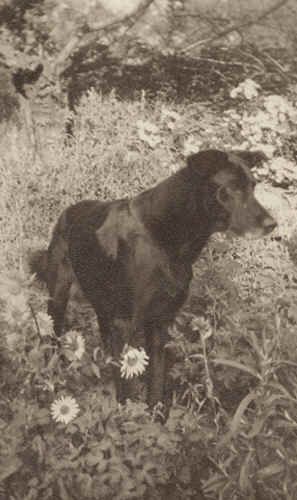
By July 1949 we had had a good potato crop at Tabor Farm, the prices having been very good for the early ones that year. Our early land had made a big difference. As with a lot of farms in Jersey, growers would expect to grow two crops out of the ground in one year. My father was still learning about the soil in St Brelade and the soil around Tabor Farm had not been cultivated for a long time, had dried and needed life putting back into it. After the disastrous tomato season of 1948 due to the drought we had that year, although my father had irrigated most of the plants it could not be called a profitable one, the soil need more feeding In September and October 1948, hundreds of tons of vraic, (seaweed) was delivered and spread like a deep blanket all over the land. The vraic must have been at least twelve inches thick and was left to rot for a couple of weeks before it was lightly rotavated in. That was my job. I enjoyed tractor work and the tractor had lights so I was able to rotavate in the dark. As soon as I returned from school each day I had work to do before I had any time to myself. My first was to feed and water Duke in the stable. He was a beautiful carthorse used during the day for different chores on the land. I would then collect the four cows from the field, give them water, take them to the stable and hand milk them. I would then switch on the hot water boiler and prepare the food for sixty pigs that were housed in the stables for fattening. The water took two hours to heat up before I could pour it into steel buckets and add the pig food to it. The twenty or so buckets took a lot of stirring and was a very warm and smelly job and the pigs had to be fed as late as possible in the evening so that they would rest afterwards. At about ten o'clock I would bring down to the stables my small terrier, Peter, and Rex, who was half red setter and half labrador, and, after banging hard on the door, would send them in to chase the dozens of rats off the buckets of pig food. They caught two or three most nights and once they caught seven.
Rex Sometimes, in the bad light of the stables, I would be about to pick up a bucket to give to the pigs, when a rat as big as a cat would jump out of the shadows just past my head and climb up a rough stone wall, disappearing through a hole in the ceiling. Then I was thirteen, now I am sixty-eight and I still do not like rats. I can still remember feeling the warmth from their bodies as they went past me in the dark.
Planting time
Irrigation was going to save our crops, especially for our tomato growing and, with the soil looking much better than in previous years, my father thought that the next season would be the best that we could hope to have. The soil had been tested and was found to be just the right balance for tomatoes. In April, tomato seedlings were bought from a grower who had heated glasshouses and my father, my mother and other helpers pricked out the seedlings in trays holding fifty plants. The glasshouse my father had built two years earlier was just the right temperature for the plants. The seedlings were put into the boxes which then were laid close together on the floor. He had planned to plant about two hundred thousand that year and the work for that many plants would have taken six weeks or so, doing them every day. Once again I helped with the pricking out of the seedlings but I preferred to place the trays on the floor. My father was the only one allowed to use the watering can and later the sprinkler on the hose pipe as he thought we might be a little heavy handed if we did it. He was right of course.
After a month or so we began to take the plants out of the glasshouse to harden up before planting. They were going to be the very early croppers. However, before we could do that we had to build a solid screen two feet high around the area where the plants would be hardened off. We found that old doors were perfect for this purpose. Once the screen was up and the plants were tucked in, we covered them with hessian sacking to protect them from the sun and the wind. We had taken out some eighty thousand plants to harden and they looked very healthy. The soil in the fields was prepared and ready when, at the beginning of June, there was a huge drop in temperature with a very cold, biting wind and a heavy frost. I think it was the 7th. We lost the lot.. The remainder of the plants would not be ready for another month. We had sowed cabbage and cauliflower seed so that we might be able to sell the plants to recover some cash as most of the crops had been near failures since we moved away from Sion Hall.
My father decided to cut our losses and, instead of selling the cabbage and cauliflower plants, we planted them ourselves. The cauliflowers would not be ready for harvesting until November but the three separate varieties of cabbage plants could be harvested through the summer months. We also planted lettuce and other marketable crops as we were willing to try anything by this time. We grew a large area of vegetables, mostly cabbages, that we sold locally although we sent the bulk to the UK. We would ring around and visit the shops and hotels in Jersey to sell our produce and were lucky enough to be able to supply many of them, which gave us a bit of breathing space cash wise.
What did upset my father was that when he approached the local supermarket the RM Stores, later called Le Riches Stores, he was told that, as they had a contract with Covent Garden Market to supply them with produce all year round, they would not be able to take any from him. That was too bad as they were less than half a mile away and could have had a better deal. My father was furious when he discovered that the store was buying its cabbages from Covent Garden who, in turn, were buying them from Langlois, Tabor Farm, Jersey and, what was worse, that the returnable crates had to be sent back to Covent Garden before being returned to us in order that the store might reclaim its deposit. What a mad world!
Tomato glut
There was always a surplus of tomatoes at the end of each season due to the fluctuations in supply and demand and, if possible, an outlet had to be found for this. Perhaps because of our price, we were lucky enough to have a contract with a canning company at First Tower to supply them with overripe tomatoes - runny ripe. After picking, we had to store them in a vermin-proof outhouse for a week or so before delivery to the canners. We would then load them on to our Dodge lorry the day before in order to make an early start the next morning. Late arrival at the canners meant waiting in a queue all day. I have never forgotten the smell of the loads of rotten tomatoes each time we entered the shed to collect our lorry, though this memory is nothing compared with that of the sight of the hundreds of rats jumping off the load and scuttling past us out of the shed. Dozens would still be on our lorry eating the fruit and it was only when we thought that we were rid of all of them, having beaten the sides of the lorry to frighten them away, that we would drive down to the canners. As our loads were usually large, it was doubtful that we had rid ourselves of all of them and it was only when the driver started tipping the tomatoes at the grader and cleaner that the horrible episode was repeated. After a dozen or so boxes had been emptied he would find himself holding one from which two or three tomato-filled rats would jump. This did not concern the canners as, not only was it a usual occurrence, but the tomatoes were to be washed and cooked and made into soup, canned in twenty-five gallon cans and shipped to troops in Germany.
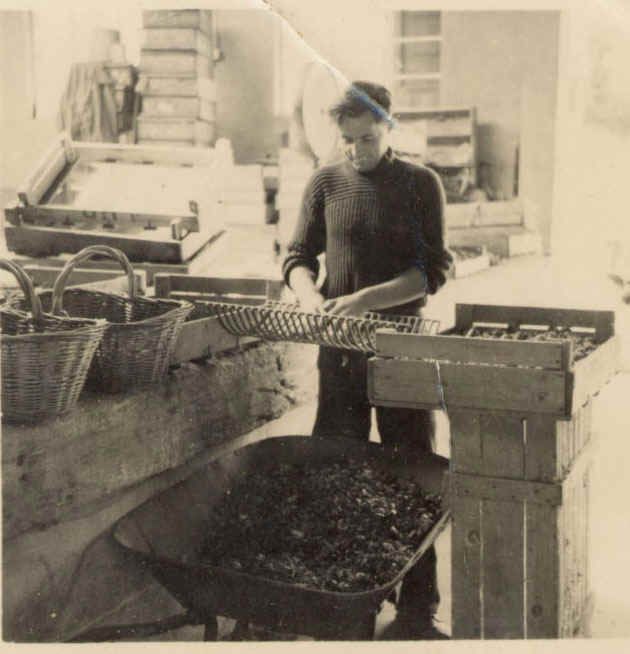
No luxuries for us, I had to clean thousands of iris bulbs by hand.
Irrigating
The tomatoes we eventually planted thrived in the good soil, fed with vraic and with the fantastic irrigation system, and brought some success to our farm. On the far side of the road, my father had built a large reservoir in concrete to hold about half a million gallons of water to irrigate the fields on that side while, near our house, he excavated the pond in the valley to four times its size to create another reservoir. The reservoir in the valley was topped up steadily from a stream but the one across the road had to be filled by tankers, which seemed a good idea at the time. However, when cash is short, you have to adapt and tankers were out of the question. It had to be another DIY job. My father found where the nearest water supply was and devised an alternative plan. The land was now good but his choice of crops meant that they would not survive a normal Summer, let alone a drought, without irrigation. He found that the Coventry Climax water pump he had taken off one of his boats was ideal for this as it was very powerful and, in fact, was exactly the same as that used on fire engines. We also used a brand new Lister, two cylinder diesel engine with a three inch centrifugal pump on wheels.
Water from Corbiere
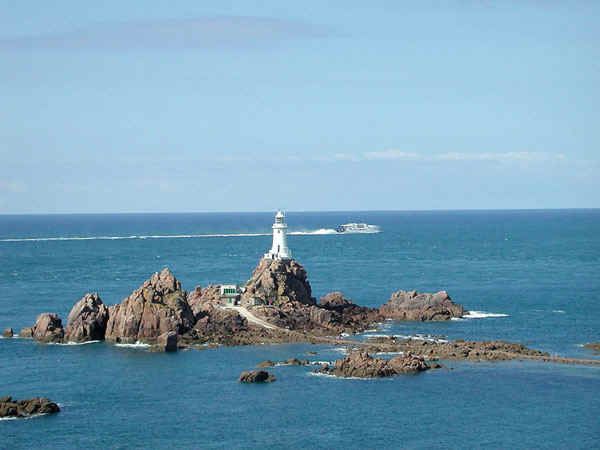
La Corbiere
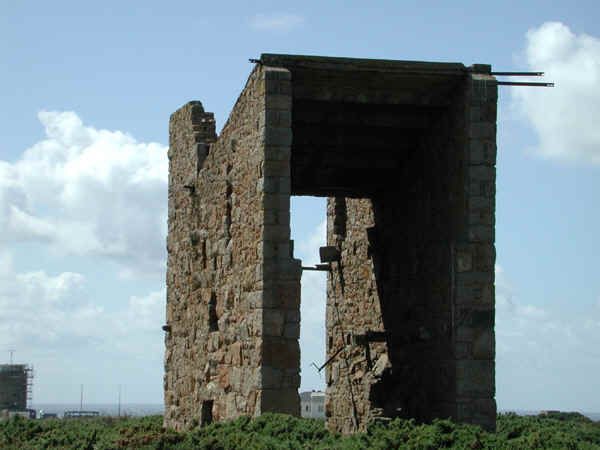
This granite structure is situated near Corbiere
where we collected the water for our reservoirs
There is a large volume of water near the surface just off either side of the Corbiere road and we collected it from one of the quarry pits near to the large, old granite construction. The water was crystal clear and we would go down into the hole with a JAP engine water pump to pump the water out into the square and round tanks on the back of the lorry or the tractors and trailors. I remember that, on hot days, when we had filled the tanks, we would swim in them before going back to the farm. We thought it advisable not to swim in the quarry as we had been warned there might be explosives left by the Germans from the last war. It is understood that Corbiere was the most fortified area in Jersey and Jersey was the most fortified in Europe, so it really was not a good idea to swim or play in that area so near Corbiere.
Grandpa's camera
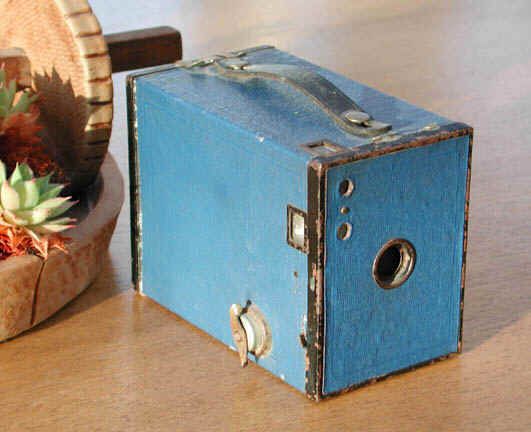
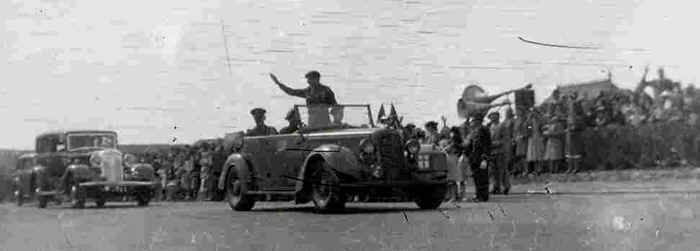
In 1949 I was thirteen and was just about ticking over at school, trying to keep up with others, when we got to hear that a famous person was going to visit Jersey. He was none other than Field Marshal Bernard Law Montgomery. The school was very excited when we heard that some of the boys were going to be able to see him going along the road at West Park. I thought I would have no chance of going but I was wrong. I was on the list and one of the chosen few. Of course I was very excited and boasted to everyone of my good fortune. My grandfather, Percy Hodgetts, told me to take his Kodak Brownie box camera with me but that I must take great care with it as he had looked after it right through the occupation, having hidden it from the Germans. Had he been caught with a camera in his possession he would have been punished so I realised how dear it was to him. I was proud that he trusted me with it, especially as I had never used a camera before. He took went to great lengths to show me how to use it and added that there were 'three left for the day'. I said that was fine but I really did not know what he meant by three, although I was shortly to find out.
As the proud possessor of a camera I pointed at everything along the road pretending take pictures like a reporter. When I reached West Park, I joined my group of school friends proudly carrying the camera in its box, unable to wait to show it to them. In my excitement as I reached into the box I must have pressed the lever on the side of the camera as there was a lick sound, I remember Grandpa saying that, when the camera clicked, turn a wheel on the side to move it on. As I did so it clicked again and someone passing by admiring the camera, told me to be careful not to waste the last film. I did not waste the last film. I think that the picture I took of Field Marshal Montgomery was brilliant. Later I found that the first click had taken a picture of the bottom of the camera box and the second click was a picture of my chin. Later Grandpa gave me his camera and I am proud to say that after fifty years I still have it.
Life carries on
On the farm, things did not change very much except to say that although money was not coming in as it had at Sion Hall, we were still staying afloat. My father had sold eight plots of land for building overlooking St Brelade's Bay. Each plot was about 1000m, the least expensive selling at £450 and the most expensive at £800. This latter would sell at £300,000. today. It felt as though Christmas had come again when we sold this land and, in fact, today. It was just as if Christmas had come when we sold that land and in fact it had. It was the end of 1950 and things were tight but not so tight as to stop the family going to London Christmas shopping and to see a few shows. We saw Brigadoon with Bruce Trent and, after the show, he invited us to his dressing room behind the stage. When he lived in Jersey he was a good friend of my mother and father. We saw South Pacific with Mary Martin, whose son, Larry Hagman, was in the chorus. He later played JR in the TV soap, Dallas.
Left school
February the 13th 1951. It was half term and we broke up at midday. I hurried home to help my father plant potatoes as we were short of labour. He had only a couple of French workers on the farm at that time and that afternoon I joined them planting in the field exactly where my house now stands. I continued working for my father for the next six years, having taken it for granted that I would work for him when I left school as did many other farmers' sons in Jersey in those days.
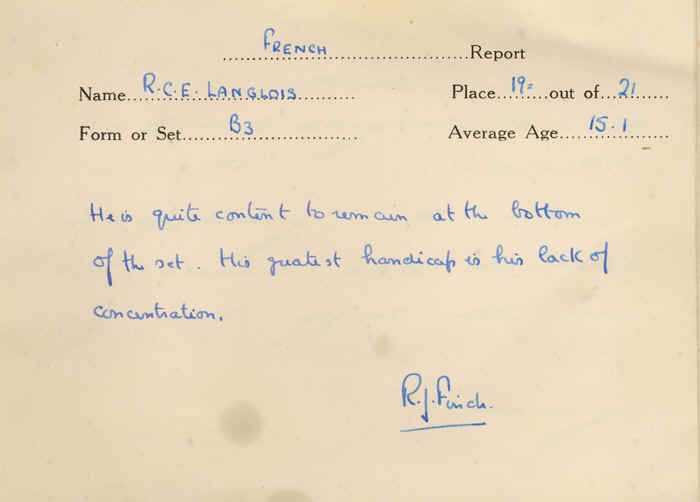
Finch got it wrong, I was not last
My father knew that I was useless at school and said that, if I wanted to stay on, I would have to go to another, because Victoria College were putting their fees up from £11 to £13 a term and he could not afford the increase. I am not exactly sure why he wanted me to leave school, though it may have been because I had lost weight in that last six months instead of putting it on as I should have and that I needed building up.
My first proper job
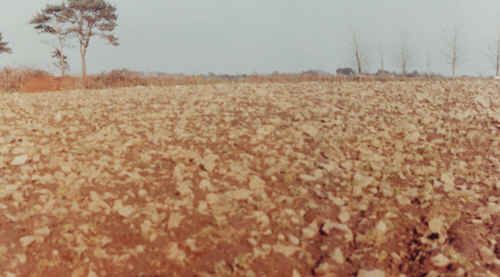
One of the first jobs I was given was to collect stones off the fields around the farm. It took me many months each year to clear only a small proportion of them.
Strangely enough, working hard on the farm was best way to build myself up. In the next year I had caught up in weight to other boys of my age but it would be uphill for me from now on. I had left school, was working on the land that I loved and was being paid £1.10s a week. My father assured me that he would give me a rise of £1.00 per week each year, explaining that I would have had more had I not been living at home. I so enjoyed working on the farm that I never counted the hours I put in and sometimes these were as many as seventy or eighty.
My first car
My father must have thought that I was doing well on the farm because he gave me the Stower. It was a four-wheel drive, four-wheel steering, three-seater radio vehicle as a bonus, although it had a broken stub axle and was up on blocks so I would not be able to drive it for some time. I used to clean and polish it regularly but it had been on blocks for a couple of years and, with my poor income, it would stay there. A family friend believed he could persuade a friend to fix it, which he did and it was a disaster. When the axle had been welded and reassembled and was on its test run, the weld gave way causing even more damage to the drive assembly.
It would be a further two years before I could raise sufficient funds to send the broken bits and pieces from my vehicle to England. I had been told in advance that the work would cost £25 0s 0d and that it would take months to do. As I had already waited so long for it to be repaired, a few more months would not make much difference to me. I packed all the pieces in a sack and sent them to the engineering company that had been recommended. Within two weeks they had returned the work to me, crated and bolted down, with instructions on its assembly, and the bill was only £3.15s.0d. plus £0. 15s. 0d. carriage.
The Stower was and still is in peoples minds some fifty years on, an odd ball of a vehicle. It could turn in its own length and it could move sideways. It was a great talking point and I used it to carry everything and everyone because it was fun. I would pick up half a dozen friends and take them for a ride around the island just for the hell of it. What they remembered most was its turning circle. For example, we would be traveling along the airport road when we would change direction, turn around in one and go back the other way. In those days the airport road was much narrower. We would also go to the far end of St. Aubin's harbour, turn again in one and drive back as fast as we could, much to the annoyance of the residents and visitors.
Time off
For many years, Mr. Arthur 'Cookie' Newman operated a beach concession at the church end of St. Brelade's beach He had rowing boats, floats and hundreds of deck chairs for hire. Whenever I could get away from the farm in the late summer evenings I would go down to the bay to see if Mr. Newman wanted any help bringing his rowing boats up the beach. I am sure that he did not but he always said "Yes please, in a few minutes. Take a boat and row around for a bit. You can help me later." I always chose a rowing boat called Anne as she seemed lighter than the others and was easy to row. Sometimes I crossed the bay. I was always grateful to Mr. Newman, as were many other youngsters. for he taught us to like and respect the sea.
Duck diving
I enjoyed swimming and duck diving and going down to the breakwater in St Brelade's Bay in the evenings to swim with friends. We used to show off to each other by jumping off the it into shallow water, or on a high spring tide, we would duck dive down to the seabed and bring up stones to prove that we had reached the bottom. Often a stone would be too heavy to lift out of the water but you would never have admitted to your friends that you had thought your lungs were about to burst.
I was stuck in the mud
One Summer evening about eight o'clock as I was finishing work, a friend of my father came to tell me that my father wanted me to go down immediately to St. Aubin's Harbour with a cauliflower knife because his boat, the Elizabeth, had a rope caught in its propellers. This friend drove like a lunatic down to the harbour, at the same time explaining that I was to dive under the boat to cut away the rope before it grounded in the deep mud. It had been a very high spring tide which was going out quickly so I had to hurry. When I felt the rope around the propeller I realised it was very tightly twisted and would be very hard to cut off. As I started cutting it in the dark, muddy water, I was just able to touch the harbour bottom with my toes but as the tide receded fast I was soon having to bend my knees to reach under the hull to the propeller. As I extricated the last piece of rope I found that I had actually sunk into the mud under the hull and, had my father's friend not pulled me out, I would not have been here today to relate this episode.
In 1953
I was 17 years old and had just passed my driving test when my father told me to take his car filled with cauliflowers, cabbages, carrots and onions around the shops to see if I could sell them. He had telephoned them earlier to ask if they would buy from him but they first wanted to see the produce. Not only was I to be allowed to drive the car but also to negotiate selling and I was being paid £3.0s.0d. per week. My father had told me that, unless business improved. I would have to stay on the same wage as the previous year. The future of the farm had seemed more secure so I had hoped to earn a little more, but could see the strain on my parents not knowing where to find enough money to pay the bills. My father sold all the pigs and the cattle and Duke, the beautiful carthorse, returned to Sion Hall, as we had only borrowed him.
Living at the Brae was all very nice but we had to sell it as soon as we could to raise money. We took in lodgers who worked in shows on the island and my father sold his boats. We were short-handed and had to work many hours as only two of us plus my father were working on the land We had extra help with the planting and were growing vegetable crops for a quicker cash return. This turned out better than we had expected and, although we planted by hand and not by machine as they do now, we had early land and knew how to irrigate the crops. The vraic with which we had manured the land two years before paid off at last as this was just the right kind of fertilizer for vegetable crops. With a little more help, we continued to grow and sell an ever larger variety of vegetables and flowers and these, coupled with the increasing number of campers who stayed on our farm each Summer, greatly improved our finances.